6G RESEARCH STUDIO · COMMUNICATIONS & WIRELESS RESEARCH SOFTWARE
6G Research Studio: 6G Simulation & Wireless Communication Research Software
A desktop product platform for wireless communications, 6G architecture and research analysis
6G Research Studio brings radio, sensing, architecture, topology, networking, mobility, experiment setup, result analysis and research tools into one continuous desktop workflow. The page now uses a report-style layout that better fits a research software product.
6G Research SoftwareWireless SimulationRadio & SensingNetwork & MobilityTopology DesignExperiment ConfigurationResearch VisualizationEngineering Tools
PRODUCT GALLERY
6G Research Studio Simulation & Research Interface Gallery
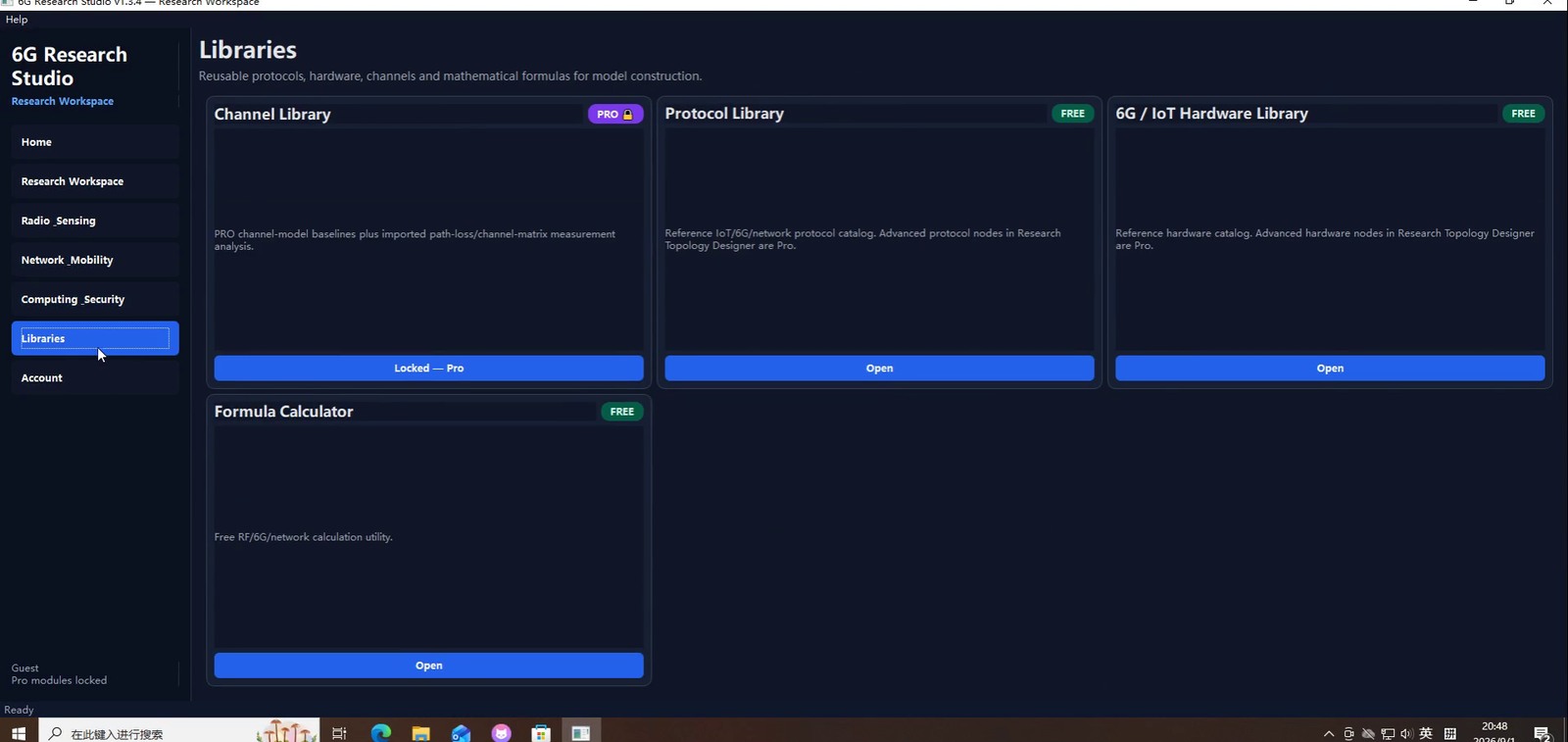
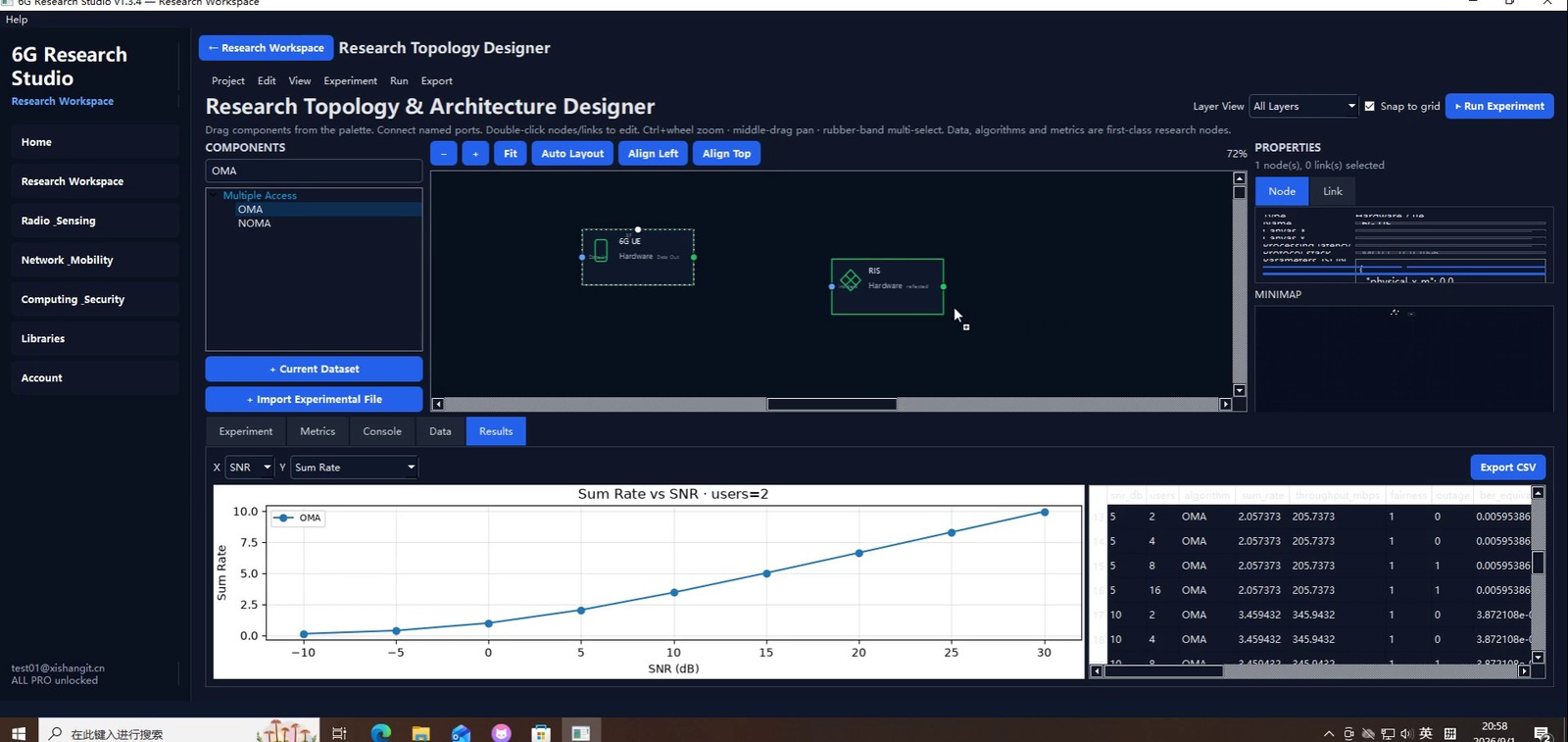
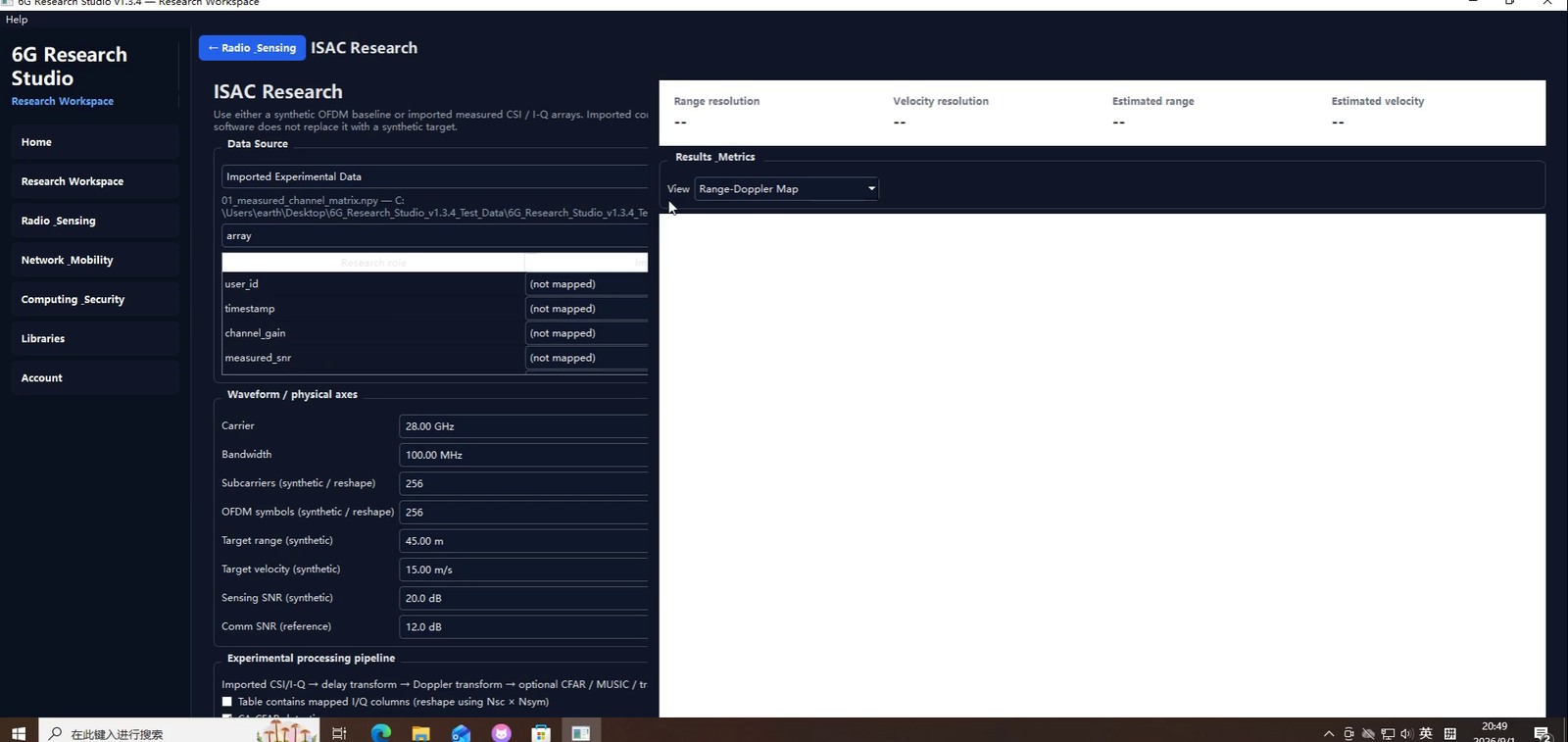
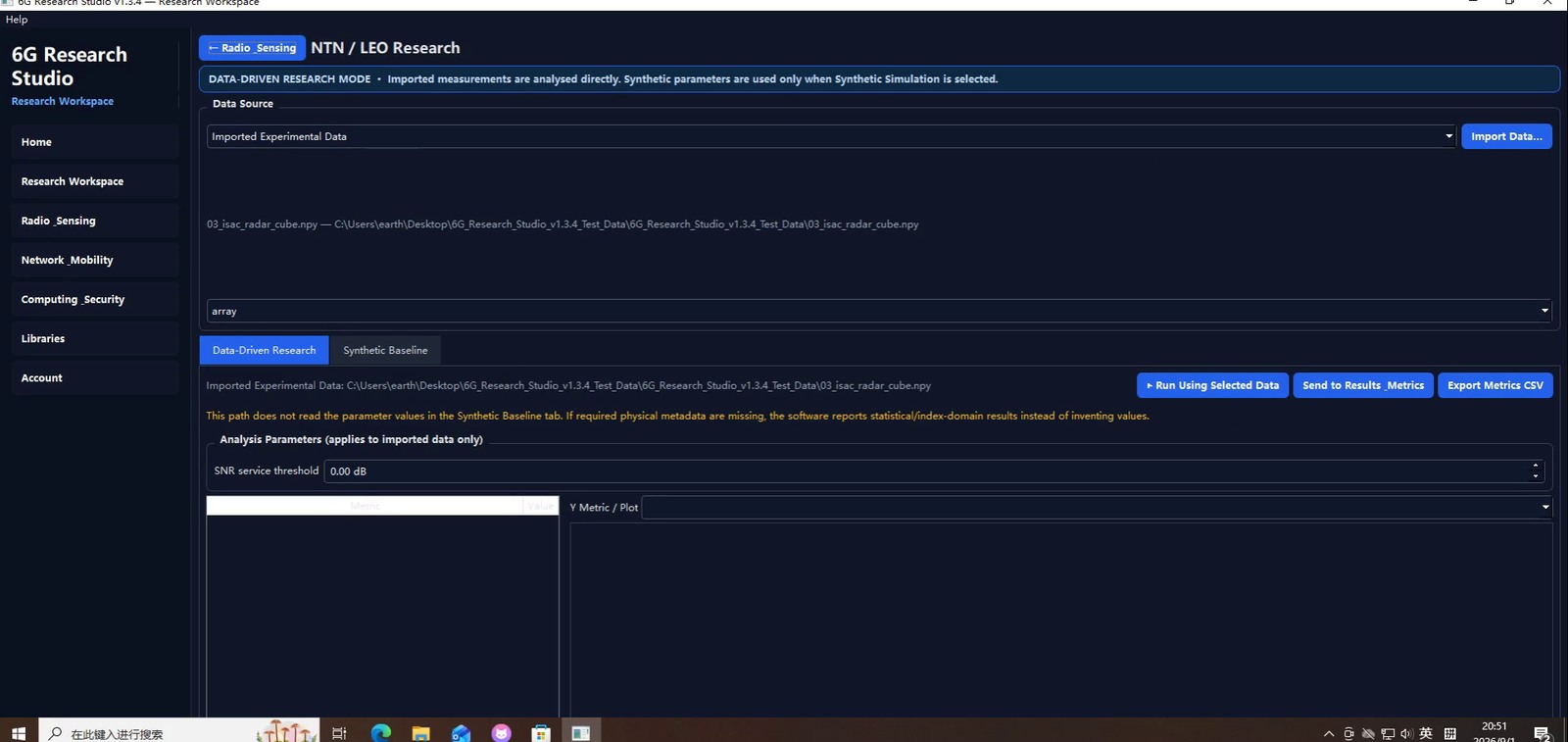
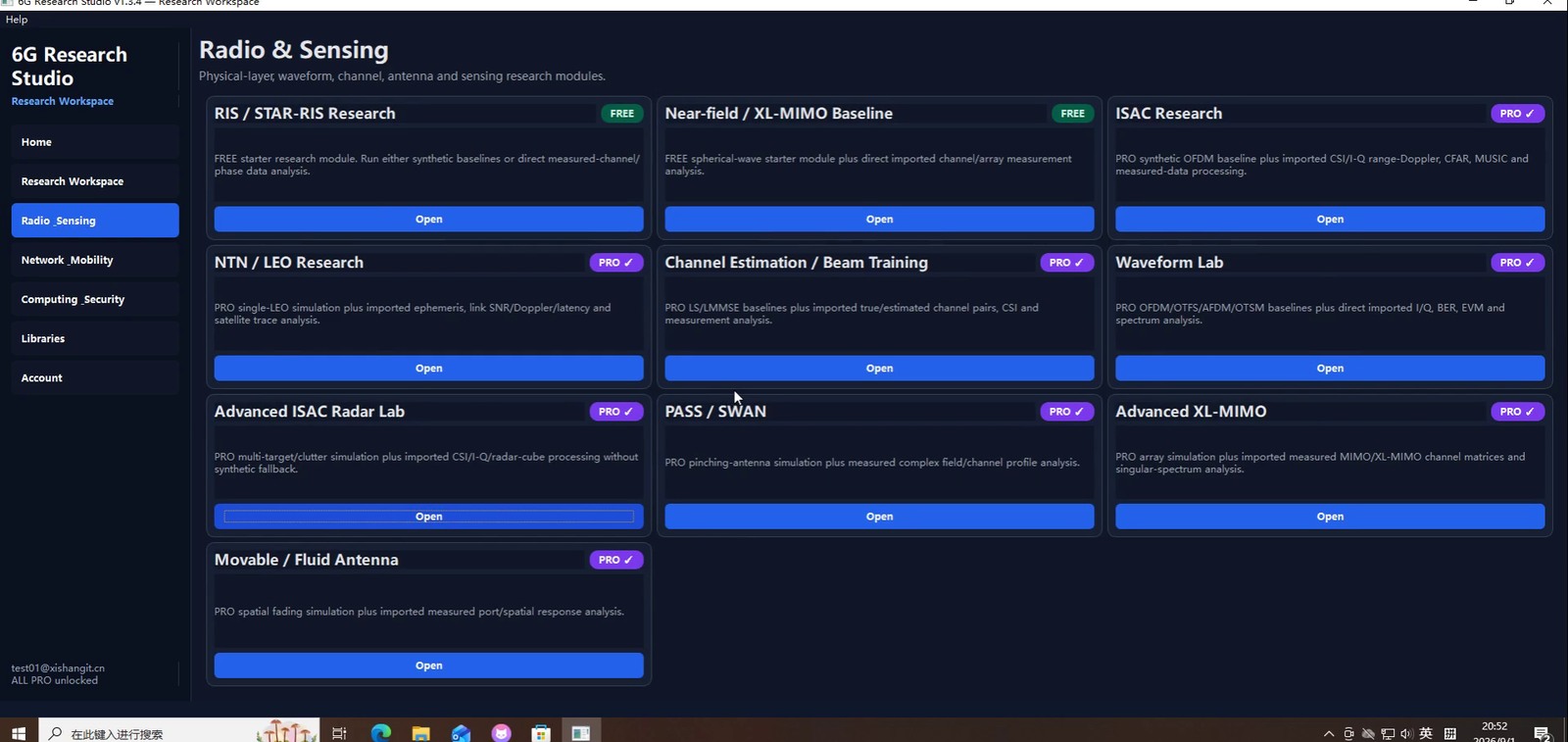
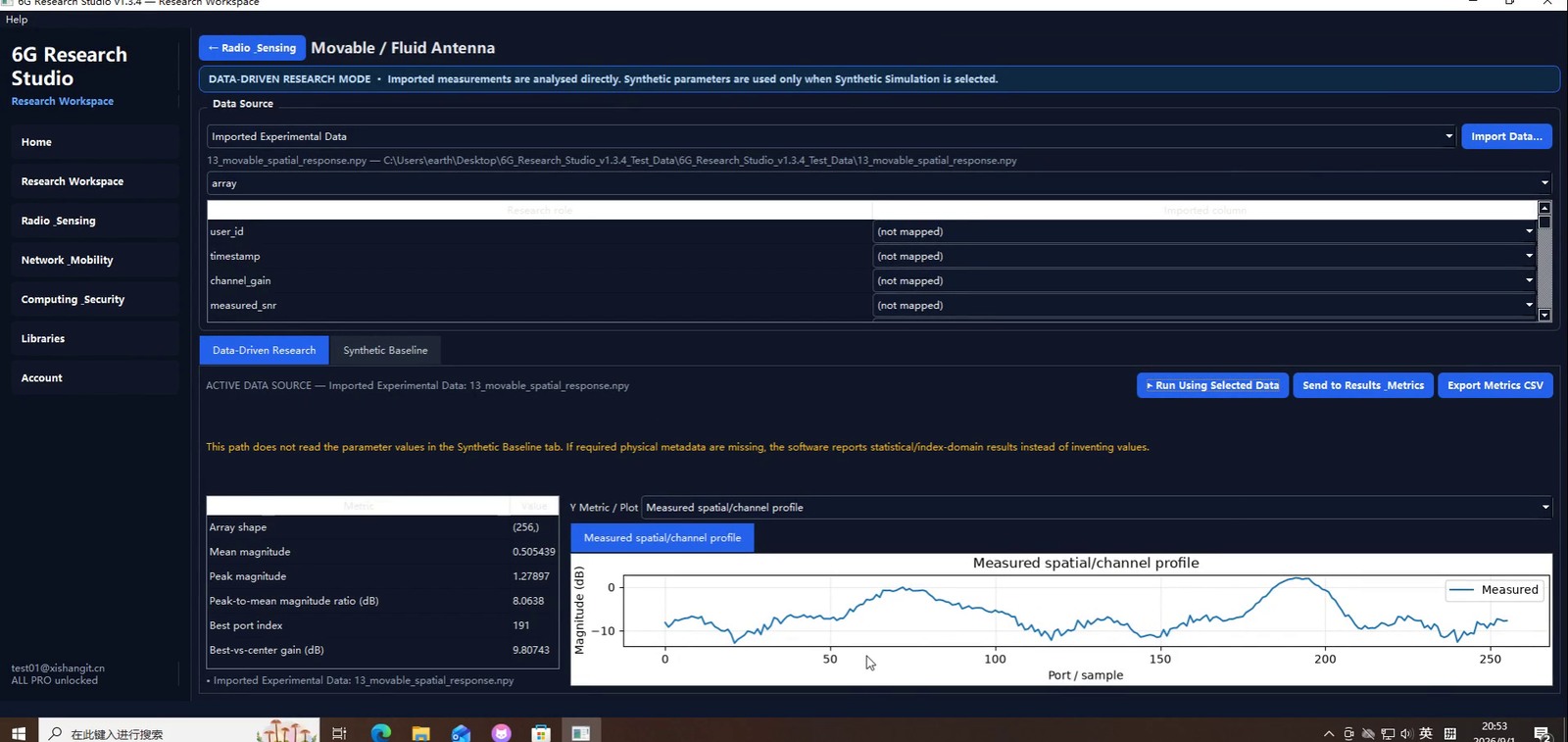
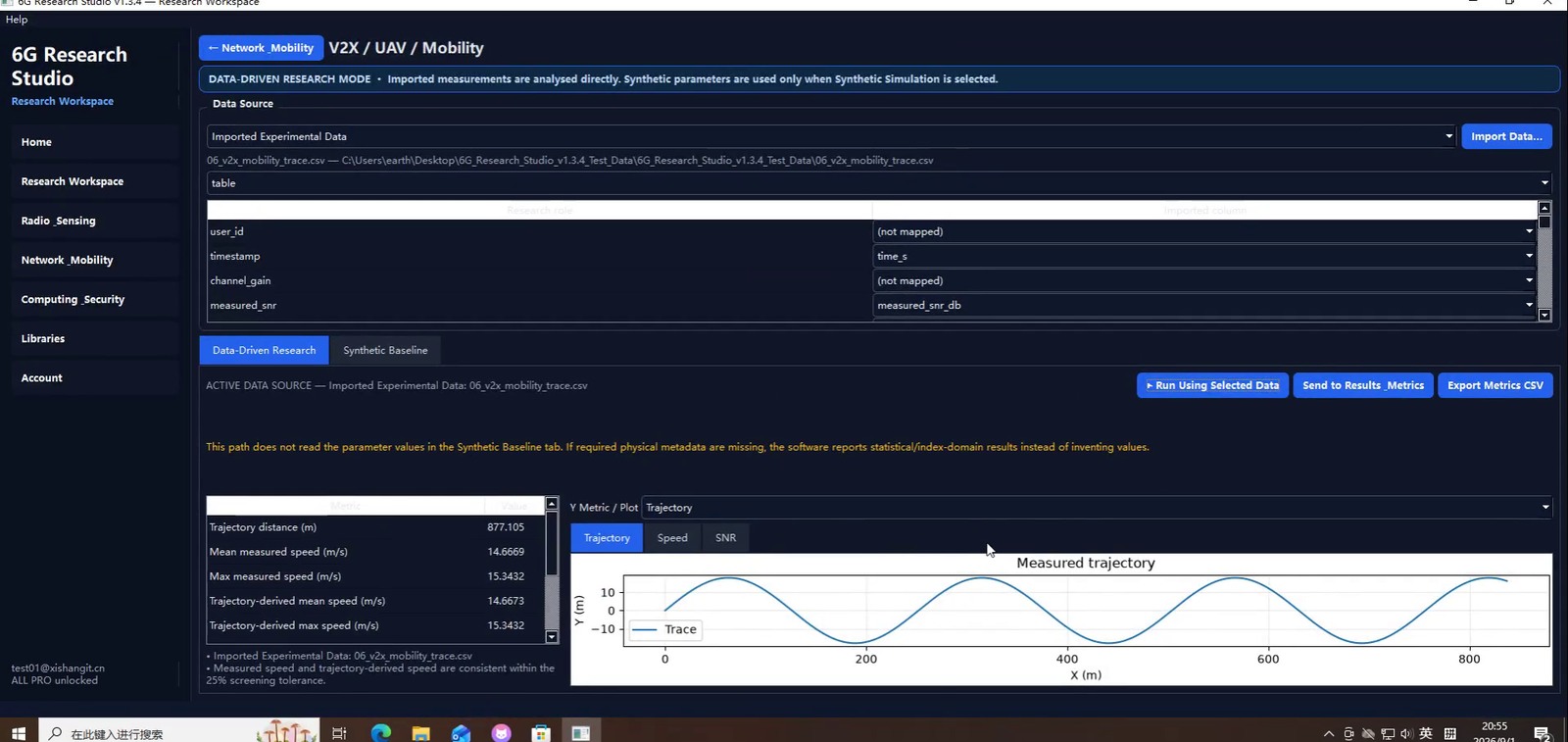
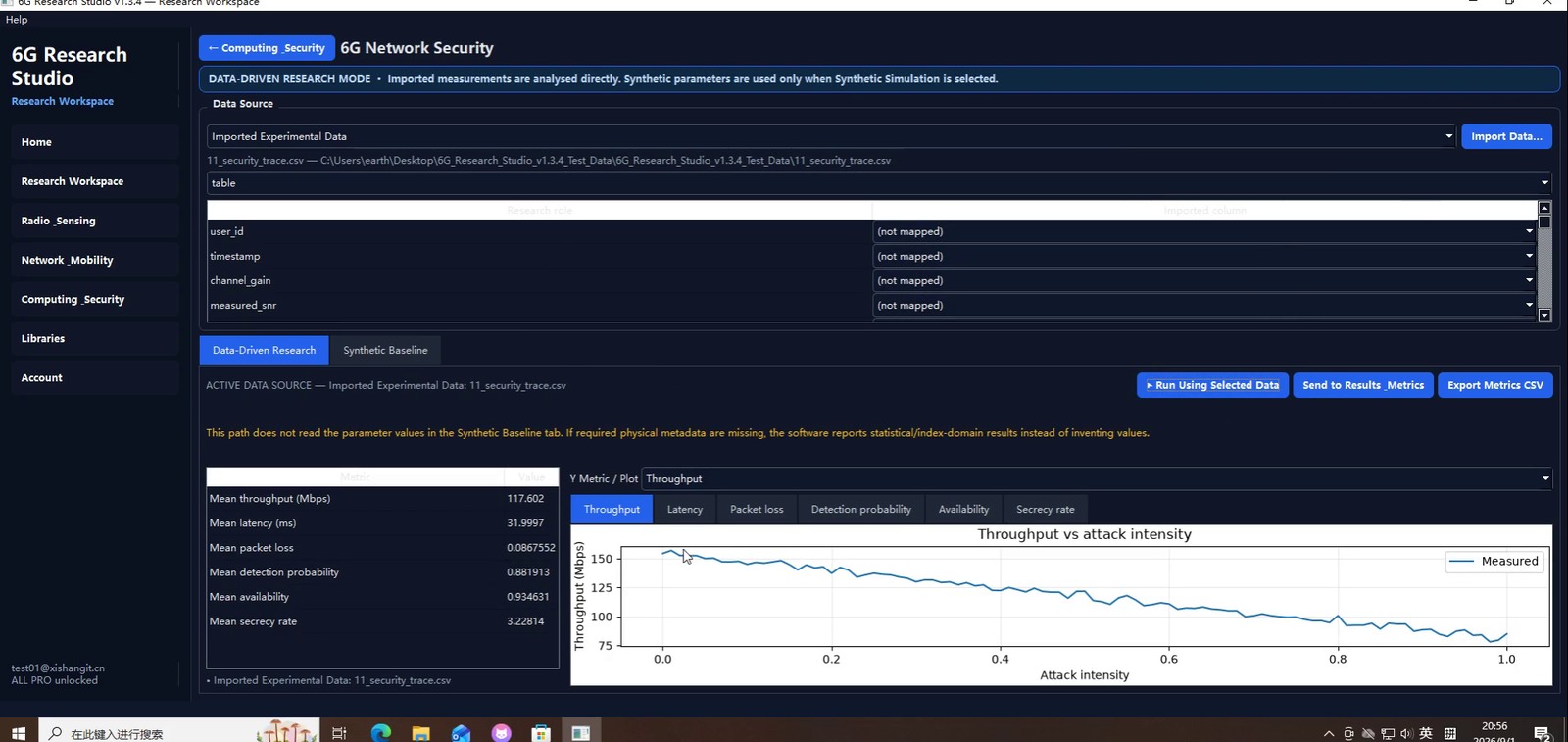
Real screenshots are used to showcase the research workspace, radio & sensing, networks & mobility, experiment configuration and analysis modules.
OVERVIEW
Core 6G & Wireless Communication Research Modules
The page opens with a carousel, then uses four thematic cards to structure the product. Each card jumps to a more detailed illustrated section below.
01
Workspace & Libraries
Organize projects, workflows, engineering tools and reusable libraries for downstream research tasks.
02Radio, Sensing & Signals
Designed for carrier, bandwidth, waveform, target and sensing studies, including ISAC-style workflows.
03Network, Mobility & Topology
Move from network behaviour to topology structure and multi-node mobility scenarios for a system-level view.
04Experiments, Results & Analysis
Configure experiment sweeps and variables, then compare outputs through visualization and analysis.
01 · WORKSPACE & REUSABLE TOOLS
6G Research Workspace & Wireless Simulation Tools
The first value of 6G Research Studio is organization: projects, simulations, datasets, algorithm experiments and engineering tools live in one desktop workspace. This reduces fragmented context switching and makes it easier to build reusable research libraries over time.
- Manage simulation, experiment and research tasks in one place
- Build reusable components through research and tools libraries
- A good fit for long-horizon research software
As the product expands, this layer can naturally host template projects, sample scenarios, algorithm packs and shared research assets.
02 · RADIO, SENSING & SIGNALS
ISAC, Radio Sensing & Wireless Signal Research
The second theme focuses on radio and sensing research. Instead of a single script, it behaves as a product module: carriers, bandwidth, subcarriers, target parameters and processing pipelines can be configured in one interface and reviewed through structured outputs. This works well for ISAC, waveform and signal-oriented studies.
- Suitable for radio, sensing, waveform and signal-chain studies
- Unified parameter configuration and result review
- Well suited for showcasing research-driven product workflows
This section also supports search-oriented keywords such as wireless sensing software, ISAC research platform, waveform analysis tool and channel analysis software.
03 · NETWORK, MOBILITY & TOPOLOGY
6G Network Mobility, Architecture & Topology Simulation
The third theme focuses on networks and system structure. It pairs the network/mobility interface with the architecture/topology design interface, turning abstract 6G research questions into more visual and configurable engineering workflows.
- Study multi-node network behaviour and mobility scenarios
- Build configurable topologies and link structures
- Makes system-level architecture thinking easier to present
If you add more products later, this node-link-topology-scenario style of content will also accumulate valuable search keywords across the site.
04 · EXPERIMENTS, RESULTS & ANALYSIS
Experiment Configuration, Parameter Sweeps & Results Analysis
Research software is not just about showing one model or one plot. What matters is whether users can repeatedly configure parameters, run experiments, inspect results and compare outputs. The experiment-configuration and analysis area closes the loop across the other research modules.
- Experiment variables, parameter sweeps and algorithm configuration
- Results visualization, metric comparison and engineering summaries
- Ready for future extension into automated experimentation and intelligent research assistants
Beyond experiment setup and result analysis, the product also covers computing and security workflows, reinforcing its direction as a broader research platform.
How the redesigned 6G Research Studio page now reads
The page now shifts from a left-right promotional block to a report-style scroll: visitors start with a carousel of real interfaces, navigate through four research themes, then continue down a set of detailed illustrated sections. For research software, this format feels more professional and scales better with future modules and SEO keywords.
Clearer structure
Visitors get an overview first, then dive deeper with a clearer module structure.
Richer visuals
Each theme is supported by real screenshots and explanatory text, making the page read more like a product report.
Better for search
Longer module explanations help cover keywords such as wireless, 6G, topology and experiment.
More expandable
New research chapters can be appended easily as the product portfolio grows.