WAVERAY · OPTICAL ENGINEERING SOFTWARE
WaveRay Optical Simulation Software
A productized engineering platform for optical analysis, imaging quality and computational optics
WaveRay combines geometric optics, imaging analysis, Fourier optics, wavefront analysis, tolerance evaluation and engineering computation into a scalable software product. This page uses a report-style layout so visitors can explore the platform module by module as they scroll.
Optical SimulationLens DesignRay TracingMTF / PSF / OTFFourier OpticsGaussian BeamZernike WavefrontMonte Carlo Tolerance
PRODUCT GALLERY
WaveRay Optical Simulation Software Interface & Feature Gallery
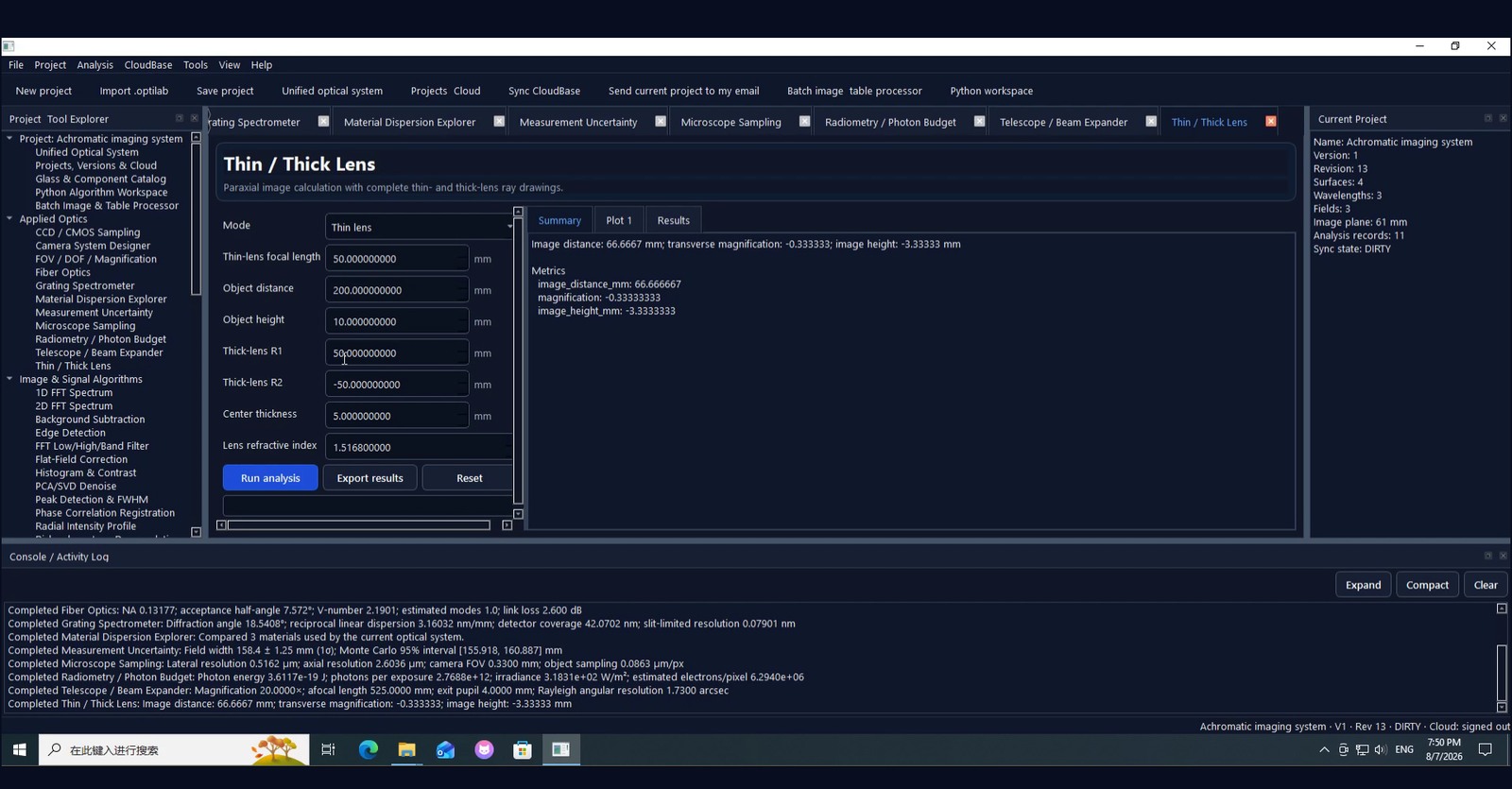
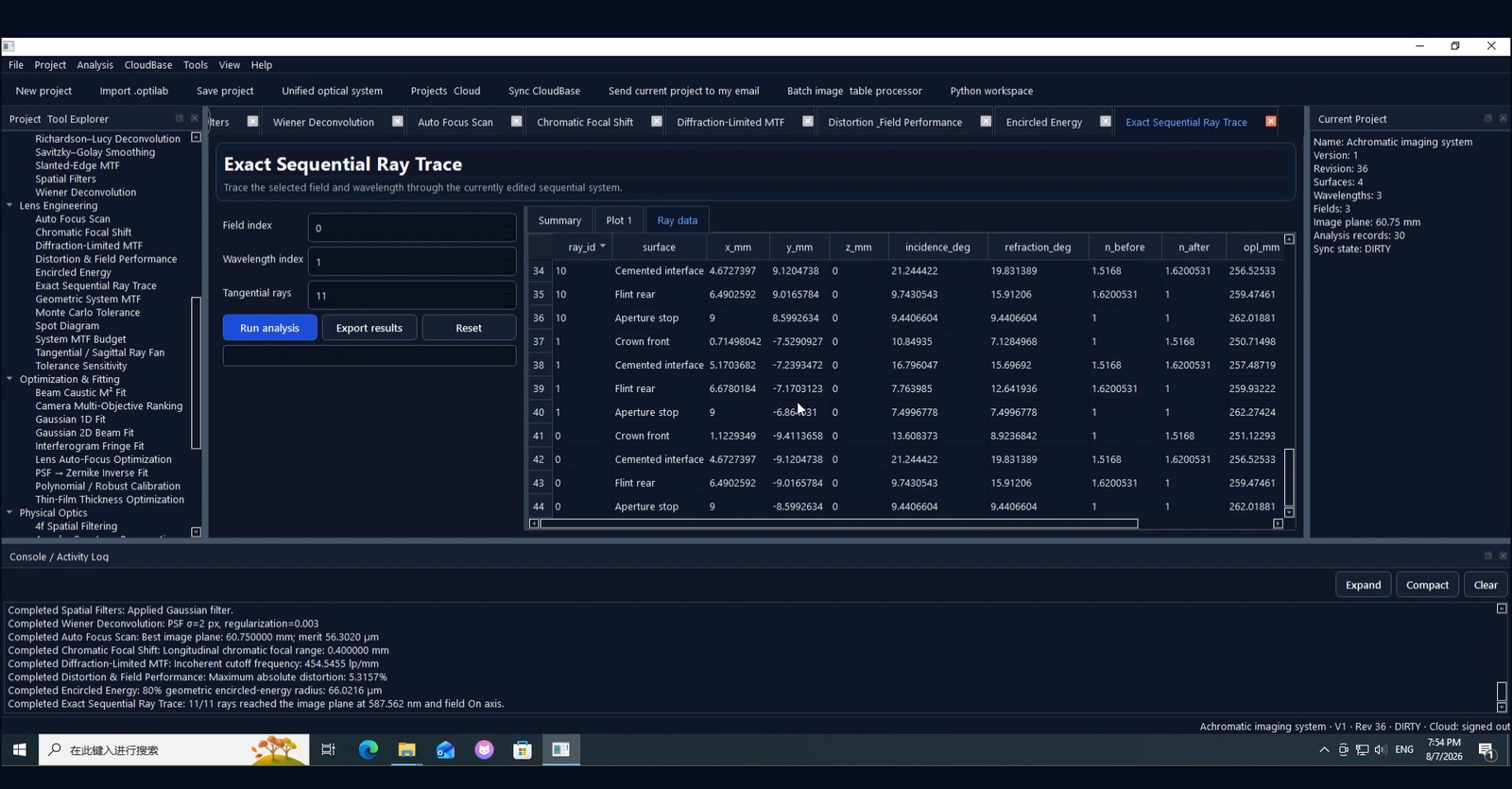
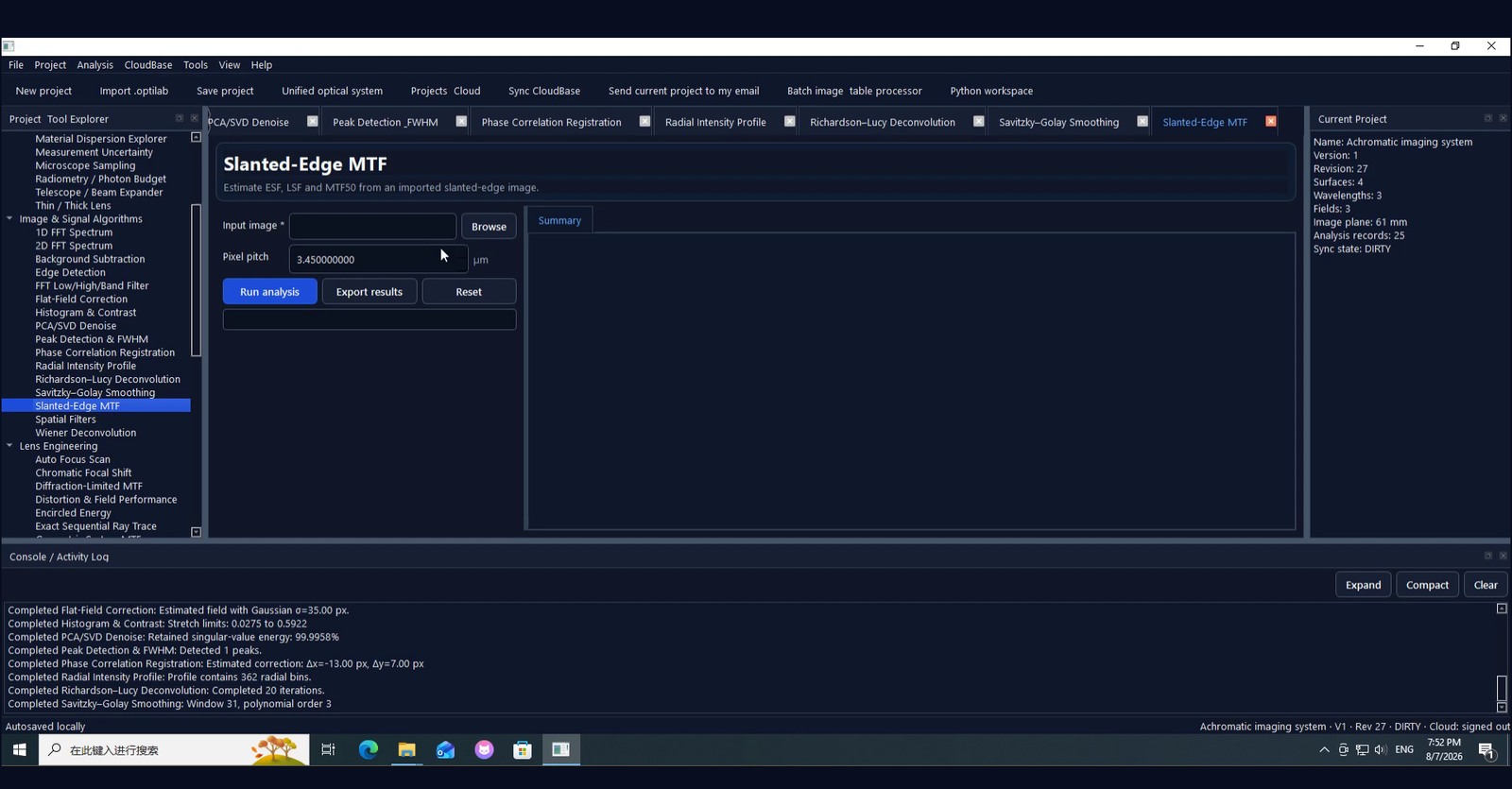
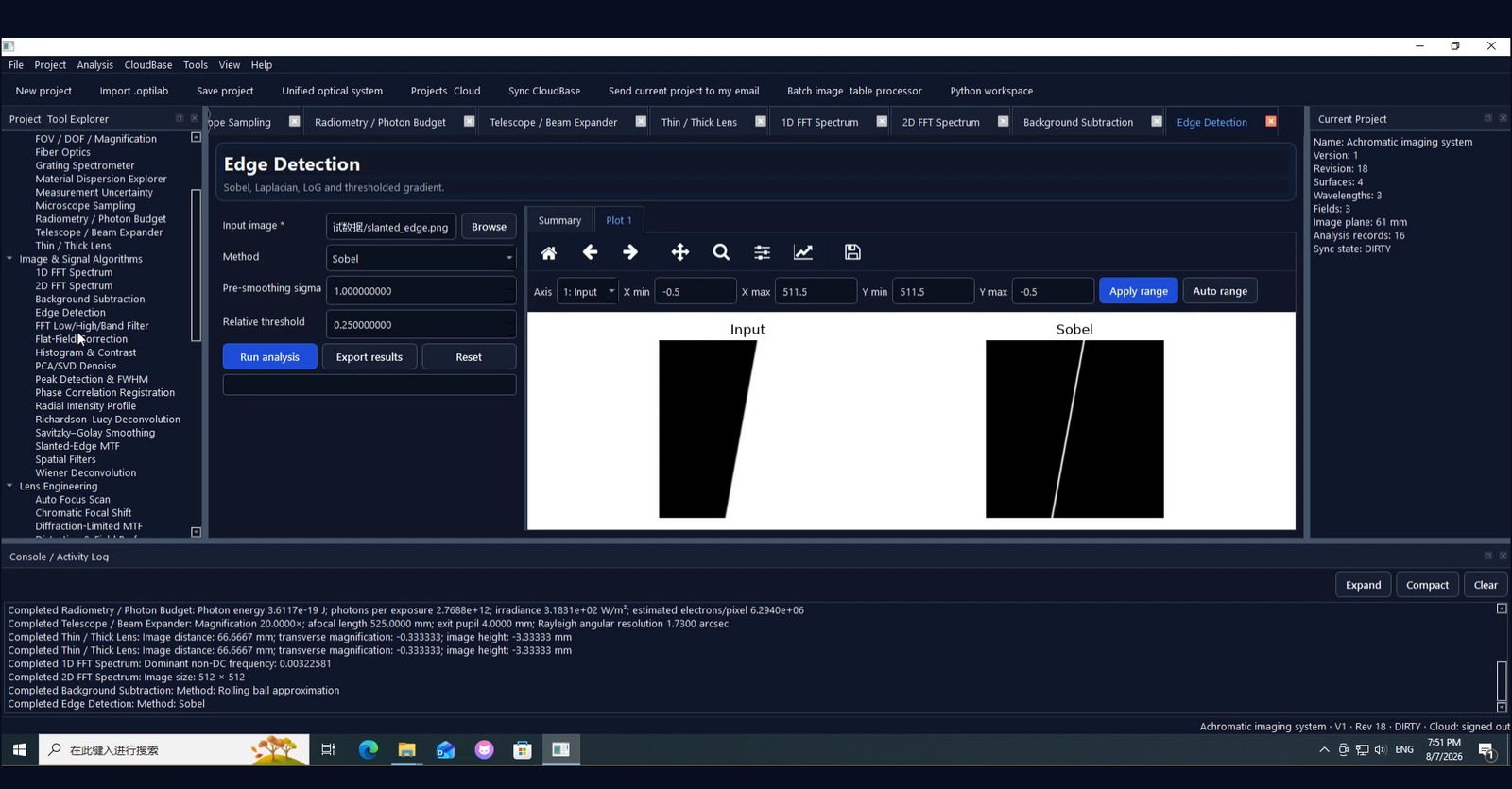
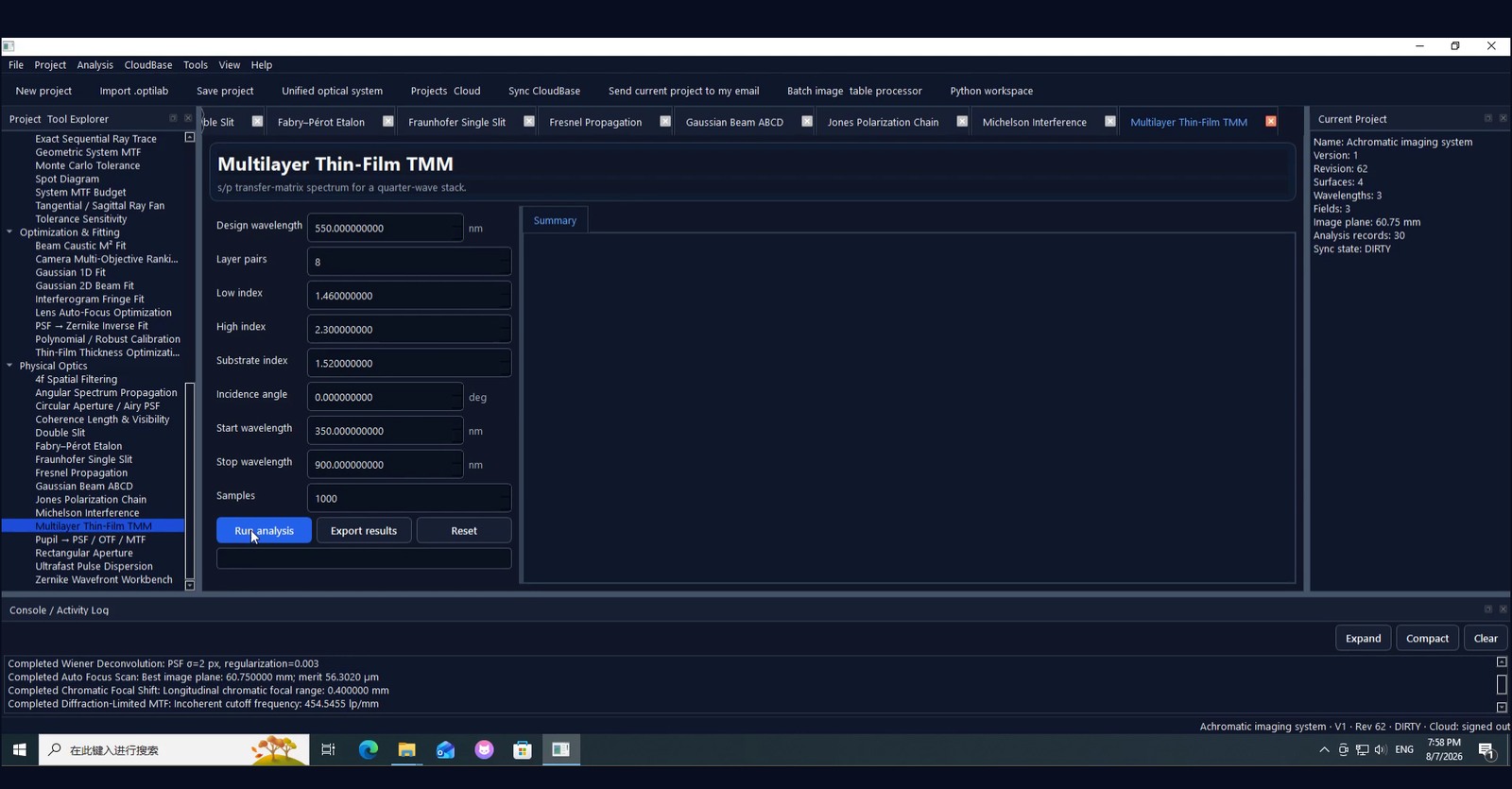
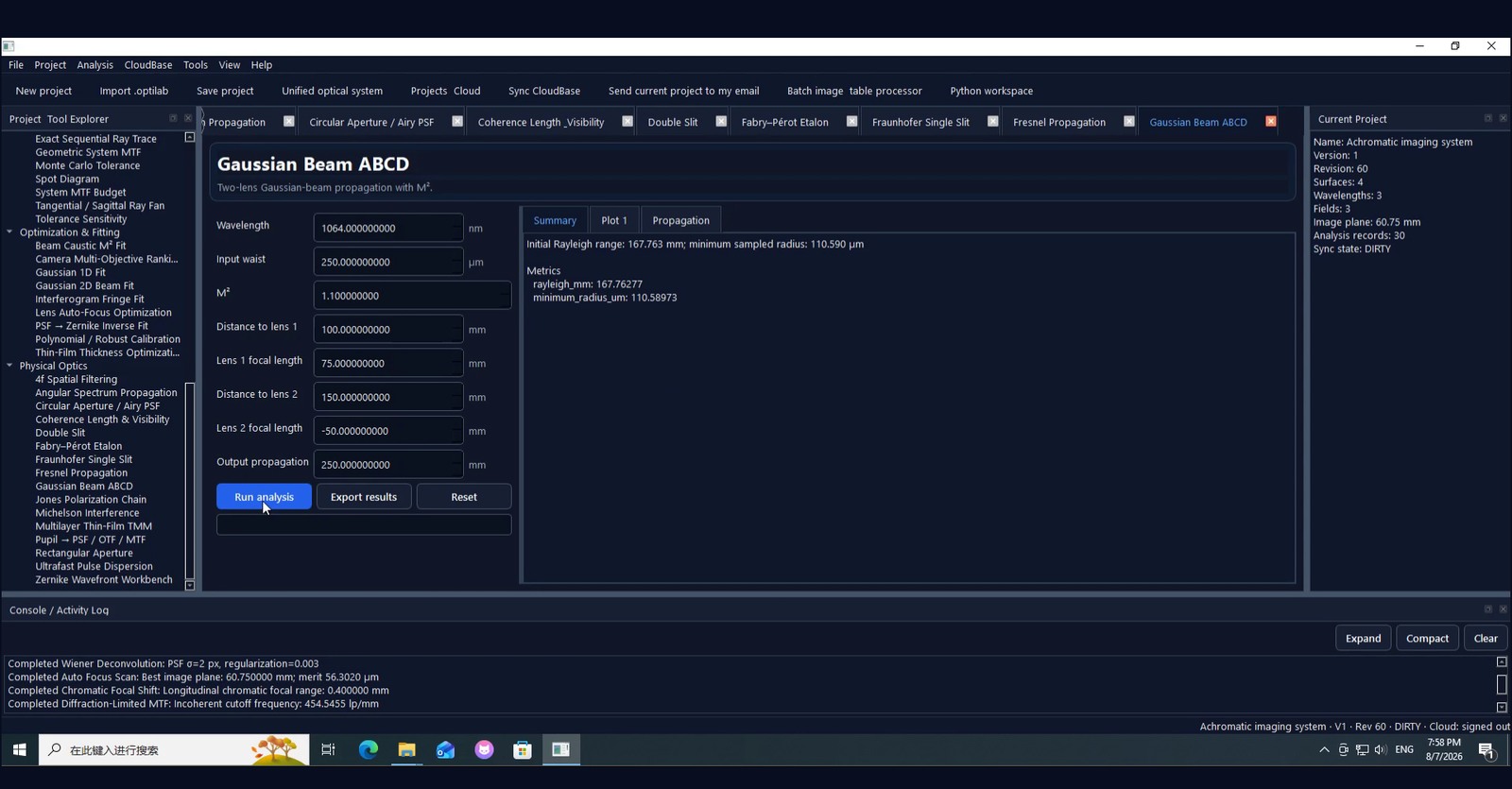
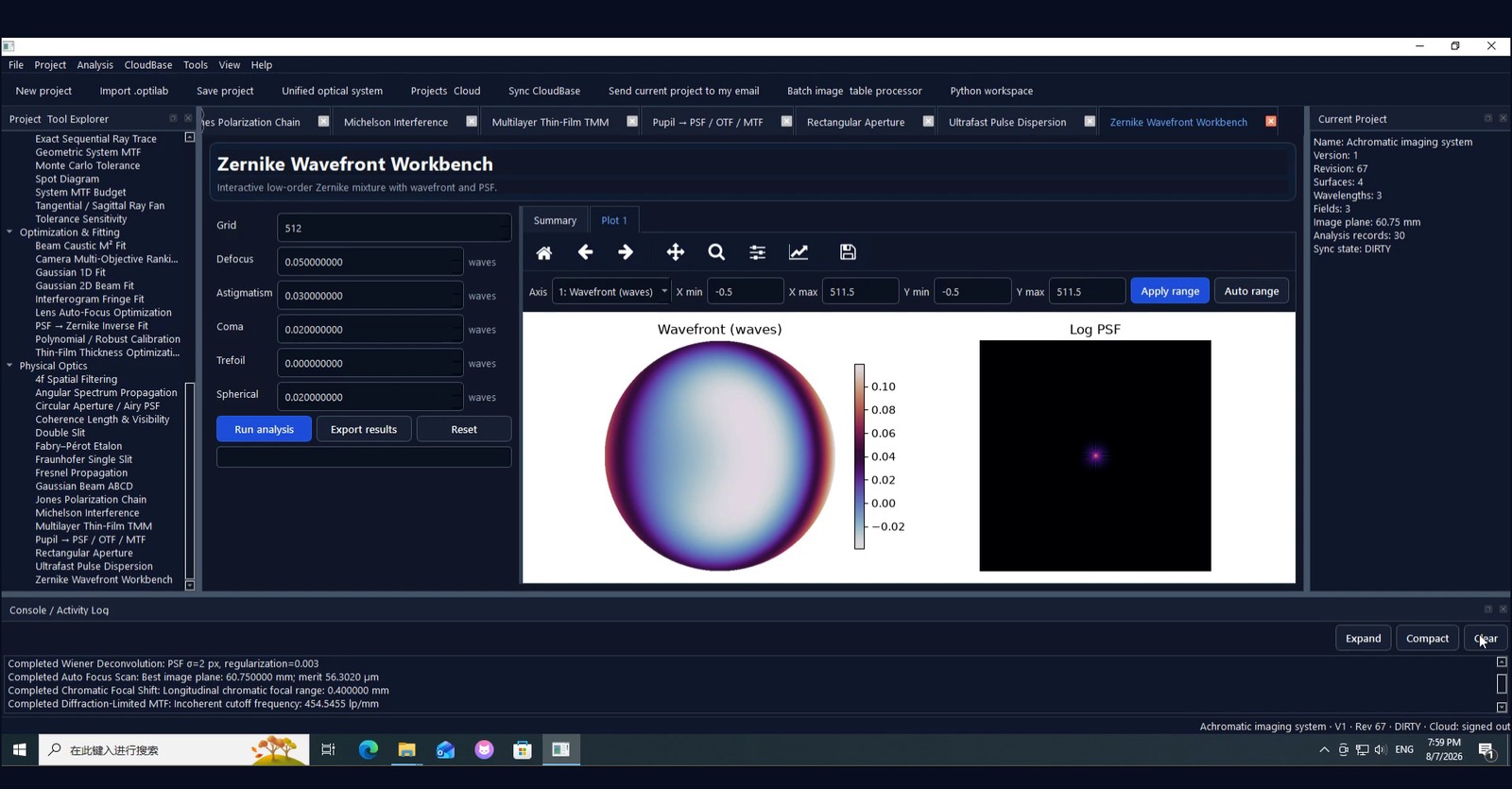
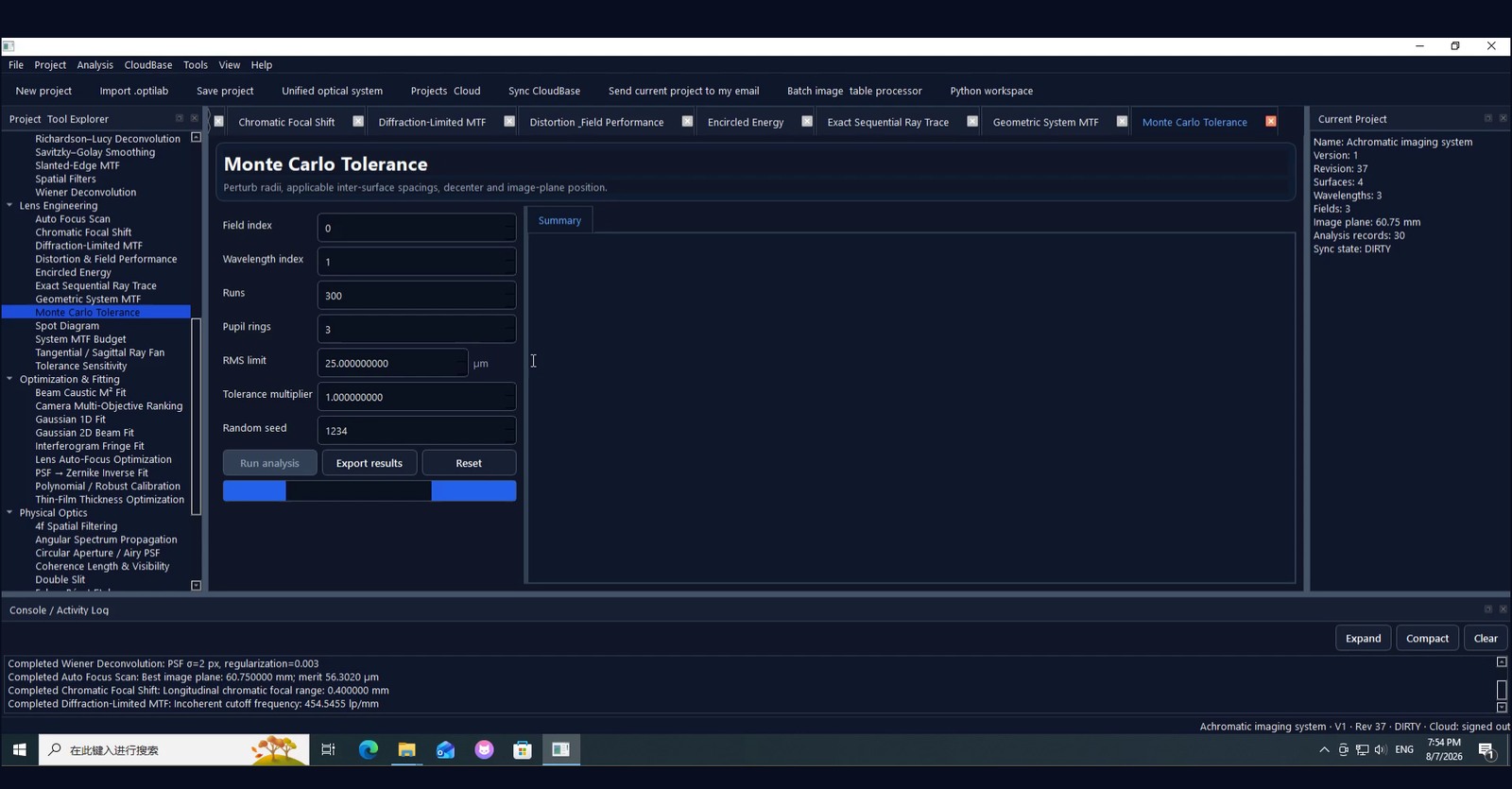
The opening section now uses a carousel to introduce the product through a set of real screenshots.
OVERVIEW
Core WaveRay Optical Engineering Features
Following your reference, the page starts with four overview cards. Click any card to jump to the detailed illustrated section below.
01
Lens & First-Order Design
Start with thin/thick lenses, focal length, magnification, depth of field and field of view for rapid optical setup.
02Ray Tracing & Tolerance
Move from sequential ray tracing to Monte Carlo tolerance analysis to inspect paths and robustness.
03Imaging Quality & Fourier Optics
Connect image-quality evaluation and physical-optics analysis with slanted-edge MTF, PSF, OTF and FFT.
04Gaussian Beam & Wavefront
Use Gaussian ABCD and Zernike wavefront analysis for laser systems, aberration studies and advanced engineering.
01 · LENS & FIRST-ORDER DESIGN
Lens Design & First-Order Optical Analysis
WaveRay starts with first-order optics and foundational lens design. It provides a practical starting point for engineers who need quick estimates of focal length, magnification, depth of field, field angle and CCD/CMOS relationships.
- Thin-lens and thick-lens analysis with parameter calculation
- Field of view, depth of field, magnification and imaging-geometry analysis
- CCD/CMOS size linked with optical parameters
- Suitable for teaching, early-stage estimation and engineering feasibility review
The value here is speed: a single clean interface replaces hand calculations, scattered scripts and disconnected spreadsheets.
02 · RAY TRACING & TOLERANCE
Ray Tracing & Optical Tolerance Analysis
In practical optical engineering, tracing the rays is only the first step. It is equally important to understand how the system responds to fabrication, alignment and parameter variations. WaveRay ties ray tracing and Monte Carlo tolerance analysis together in one flow.
- Sequential ray tracing for image-path and image-plane inspection
- Monte Carlo tolerance analysis for manufacturing-variation impact assessment
- Built for engineering optimization rather than just classroom demonstrations
As the product expands, this area can naturally extend into spot diagrams, ray fans, tolerance budgets and more advanced system-optimization workflows.
03 · IMAGING QUALITY & FOURIER OPTICS
MTF, PSF, OTF & Fourier Optics Analysis
WaveRay goes beyond path calculation by connecting image-quality evaluation with Fourier-optics processing. This lets users move from system parameters to image quality and reason back from image behaviour to system issues.
- Slanted-edge MTF supports real-image sharpness evaluation
- PSF / OTF / MTF workflows evaluate imaging performance together
- FFT and frequency-domain tools bridge physical optics and image algorithms
This section also supports SEO keywords such as MTF software, PSF analysis, OTF analysis, Fourier optics software and image-quality analysis.
04 · GAUSSIAN BEAM & WAVEFRONT
Gaussian Beam & Zernike Wavefront Analysis
For laser systems, higher-order aberration studies and precision imaging, WaveRay includes Gaussian Beam ABCD and Zernike wavefront tools. This extends the platform from basic geometrical optics into more advanced engineering questions.
- Gaussian Beam ABCD for beam propagation and parameter analysis
- Zernike wavefront decomposition for aberration and wavefront-quality evaluation
- Well suited for extension into broader PSF, aberration and optimization workflows
For future commercial expansion, this theme can evolve into higher-value modules such as wavefront budgets, laser-path design and aberration reporting.
How the redesigned WaveRay page now reads
The page now reads more like a product report than a left-right marketing block: a carousel at the top, four thematic cards in the middle, then a series of illustrated deep-dive sections below. This makes the software easier to understand and more expandable for future SEO and product growth.
Easy to expand
New capability chapters can be appended easily as the product grows.
More product-focused
Compared with a simple collage layout, this approach highlights product capability and narrative.
Better for SEO
Each module carries more descriptive text and keyword coverage, which helps Google indexing.
Easier to read
Visitors can start with the overview and then dive into the module that matters to them most.